
For club or for country? The World Cup or Wycombe Wanderers from a fan's perspective
17.06.26, 12:00 Updated 14.06.26, 12:51 4 Minute Read
Chris Spratt
Ahead of England's World Cup opener, Wycombe Wanderers supporter Chris Spratt discussed the age-old club or country debate.
With another World Cup now close enough to dominate conversations in pubs, workplaces and WhatsApp groups, the perennial question of club or country will no doubt rear its head once again.
Radio phone-ins will crackle with debate, pub conversations will become increasingly animated, and social media will fill with arguments about what would mean more: seeing your club win a major trophy or watching England finally end sixty years of hurt and bring home another major international title.
Sadly, as Wycombe fans, it is not a debate that has ever really felt realistic. For this not particularly well-travelled Englishman, it is difficult to know whether such debates take place in the far-flung corners of the planet and, if they do, whether they are quite so finely balanced.
Yet for those of us on this island, the question seems to divide opinion far more than it probably should.
After all, surely a World Cup victory would create a level of collective hysteria unlike anything else? Surely nobody would willingly turn their back on that?

In the film adaptation of Nick Hornby's Fever Pitch, there is a scene near the end where fans celebrate together in sheer, unrestrained jubilation. Arms are wrapped around strangers – grown men lose all sense of dignity – the joy is overwhelming and entirely irrational.
But scenes like that have not been confined to the silver screen.
Across parts of England this year, supporters of clubs such as Crystal Palace, Lincoln City and Coventry City have experienced moments of success that would have seemed almost unimaginable just a few years ago.
Perhaps those moments are not quite so distant for clubs such as ours. When Wycombe reached the FA Cup semi-final in 2001, those scenes belonged to us. For six glorious months, the impossible felt not just possible, but probable.
Every round brought fresh dreams and fresh reasons to believe. The sort of fever that Hornby wrote about was alive and well in Buckinghamshire. Yet, despite all of that, those achievements remained confined to a small corner of a small market town.
But if England were to triumph on the biggest stage, what has been witnessed in a handful of pockets around the country would become a tidal wave of euphoria washing over the entire nation, the like of which has never been seen before. So why does the debate exist at all?
Perhaps it is because, after failure upon perceived failure, many supporters have become disillusioned with the national team.
For a country steadfast in its belief that it gave the beautiful game to the world, there is no escaping the fact that England have underachieved.
One World Cup and two losing appearances in major finals represent a poor return for a nation blessed with a rich pool of talent, outstanding facilities and financial resources that dwarf those of most competitors.
As encouraging as the last four tournaments have been, the scars of what came before remain difficult to erase.
France in 2016, Brazil just two years earlier, and failure even to qualify in 1994, 1974 and 1978, among countless other disappointments.
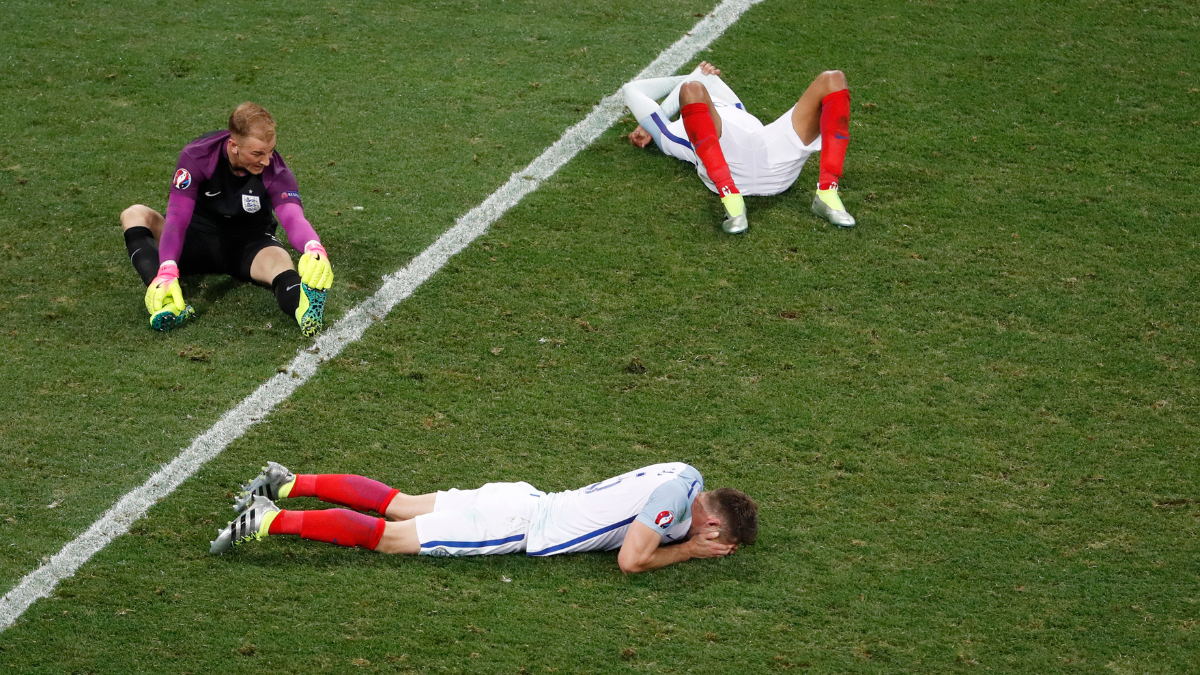
Quite frankly, who would hold out much hope after that? The humiliations and disappointments that preceded this recent period of relative success continue to drain belief from even the most optimistic supporter.
I was nine when England lost in Italia '90 and fifteen when Germany beat us at Wembley during Euro '96. At that point, I vividly remember thinking that success was inevitable; that it was only a matter of time before I saw England lift a major trophy.
Thirty years later, having said goodbye to some of the friends and family members with whom I watched those matches—some of whom I was certain I would one day celebrate an England tournament victory with—I realise just how naive that belief was.
Perhaps a yearning for club success over country is simply down to what feels more realistic. Clubs our size have reached the Premier League. Clubs our size have played in Europe. Maybe it could happen one day. But for England, why should this year be any different?
England are merely one of many nations convinced that the trophy belongs to them. We have no God-given right to win it.
Increasingly, I find myself accepting the possibility that I may never witness England triumph in a major tournament.
And then there is the domestic game. While we can debate the qualities of the national side, there is little argument that the football pyramid in this country remains the finest in the world, with the Premier League at its summit having transformed itself into a global behemoth, watched and adored by millions across every continent.
Its clubs are packed with some of the world's finest players, and across the three European competitions it almost feels inevitable that an English side will win at least one trophy each season, and often more.
No other country has a league system quite like ours, so surely international tournaments should offer a realistic opportunity for glory that club football cannot. Take Croatia, a country of fewer than four million people, yet a semi-finalist at the last two World Cups.
When their clubs are scrabbling around for the crumbs left on the Conference League table, it is no wonder that international tournaments are greeted with the kind of anticipation usually reserved for a starving person at an all-you-can-eat buffet.
With so much success enjoyed by so many clubs here, and with the weekly spectacle proving so consistently compelling, it becomes easier to understand why some supporters would choose club success over international glory.
There is another factor too. For many people, the country itself does not currently represent what they feel it should.
Forget political allegiances for a moment; football has always been about identity and belonging.
A football club is often woven into the fabric of a person's life in a way that a national team simply cannot replicate. It is there every week. It accompanies childhood, friendships, family traditions and entire communities. It provides a sense of continuity that survives changes in governments, fashions and generations.
That is certainly the case with Wycombe. The friendships that mean the most to me have generally been forged at Adams Park.
The faces I see every week, the conversations that continue from one Saturday to the next, the shared experiences that bind us together.
Sharing moments with those people is unparalleled when compared with the idea of celebrating alongside someone I have never spoken to before.
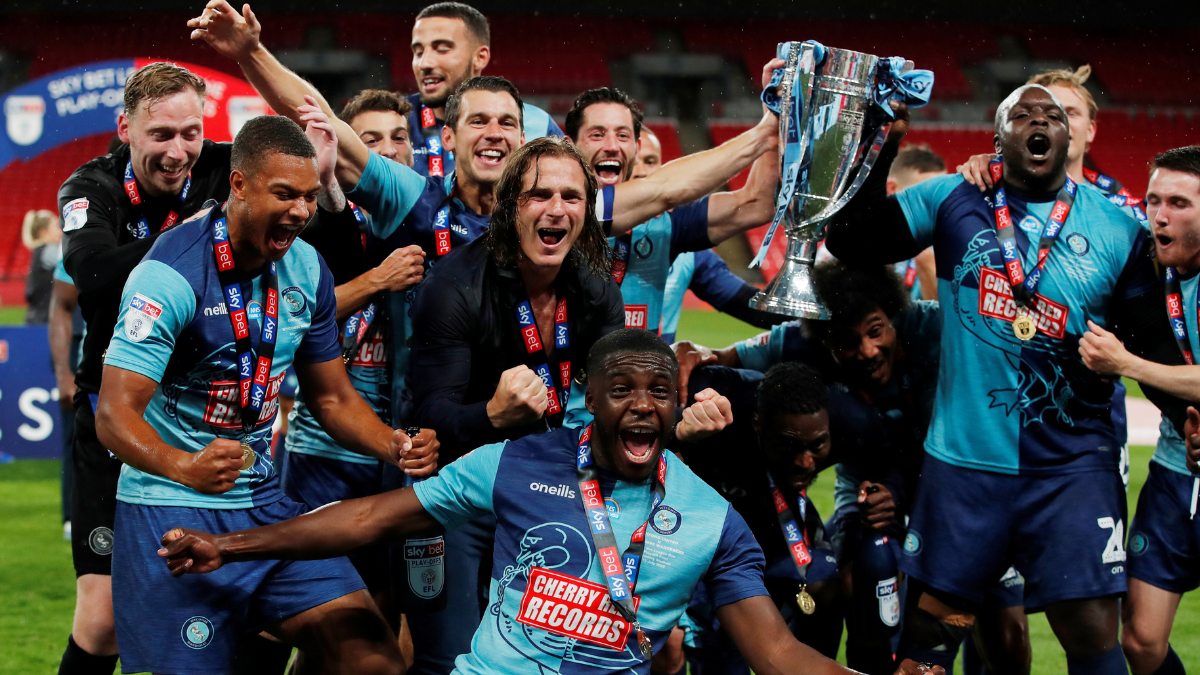

With your club, and with the people you stand beside each week, you know they have felt the same pain. You know they have shed the same tears. You know they have endured the same hopeless away trips and crushing defeats.
When success finally arrives, it feels earned because you have travelled the road together. But with England, does it mean the same thing to all of us?
Our clubs represent more than football. They represent where we live, where we grew up and who we are.
As much as we may not be proud of where the country finds itself right now, I will always be proud of the town where I was born, where I grew up, and where generations of my family earned their living through the trades and industries that shaped the local area.
England, by contrast, appears only occasionally. It asks for emotional investment every couple of years and then often leaves supporters nursing familiar disappointment. Perhaps that is why the debate endures.
Yet despite all of that, if England were somehow to lift the World Cup this summer, I suspect most of us would quickly discover that international success can still surpass anything club football can offer, and the arguments would disappear.
The hypotheticals would become irrelevant. We would spill out into streets, pubs and town centres, embracing strangers and behaving in ways that would embarrass us for years afterwards.
Perhaps that is because of the times in which we live. It often feels as though we spend more time arguing than celebrating.
Social media amplifies every disagreement, politics has become increasingly tribal, and there are days when the country appears more comfortable pulling itself apart than coming together.
An England World Cup victory would not solve any of those problems. It would not lower anyone's bills, shorten NHS waiting lists or heal every political division. But for a few days, none of that would matter.
The national team, playing the national sport, would return home as heroes. The endless arguments would fall silent. Complete strangers would find themselves sharing pints, songs and stories with people they would otherwise never meet, and perhaps that is why the debate exists at all.
Club football may own our hearts for forty-six Saturdays a year, but a World Cup win would belong to everyone. For a few glorious days, at least, club versus country would no longer matter. The argument would finally have its answer.
Related Topics
Chris Spratt Contributor